> For the complete documentation index, see [llms.txt](https://blueskytechco.gitbook.io/alukas-shopify/llms.txt). Markdown versions of documentation pages are available by appending `.md` to page URLs; this page is available as [Markdown](https://blueskytechco.gitbook.io/alukas-shopify/other-pages-settings/blogs.md).
# Blogs
{% hint style="success" %}
Steps
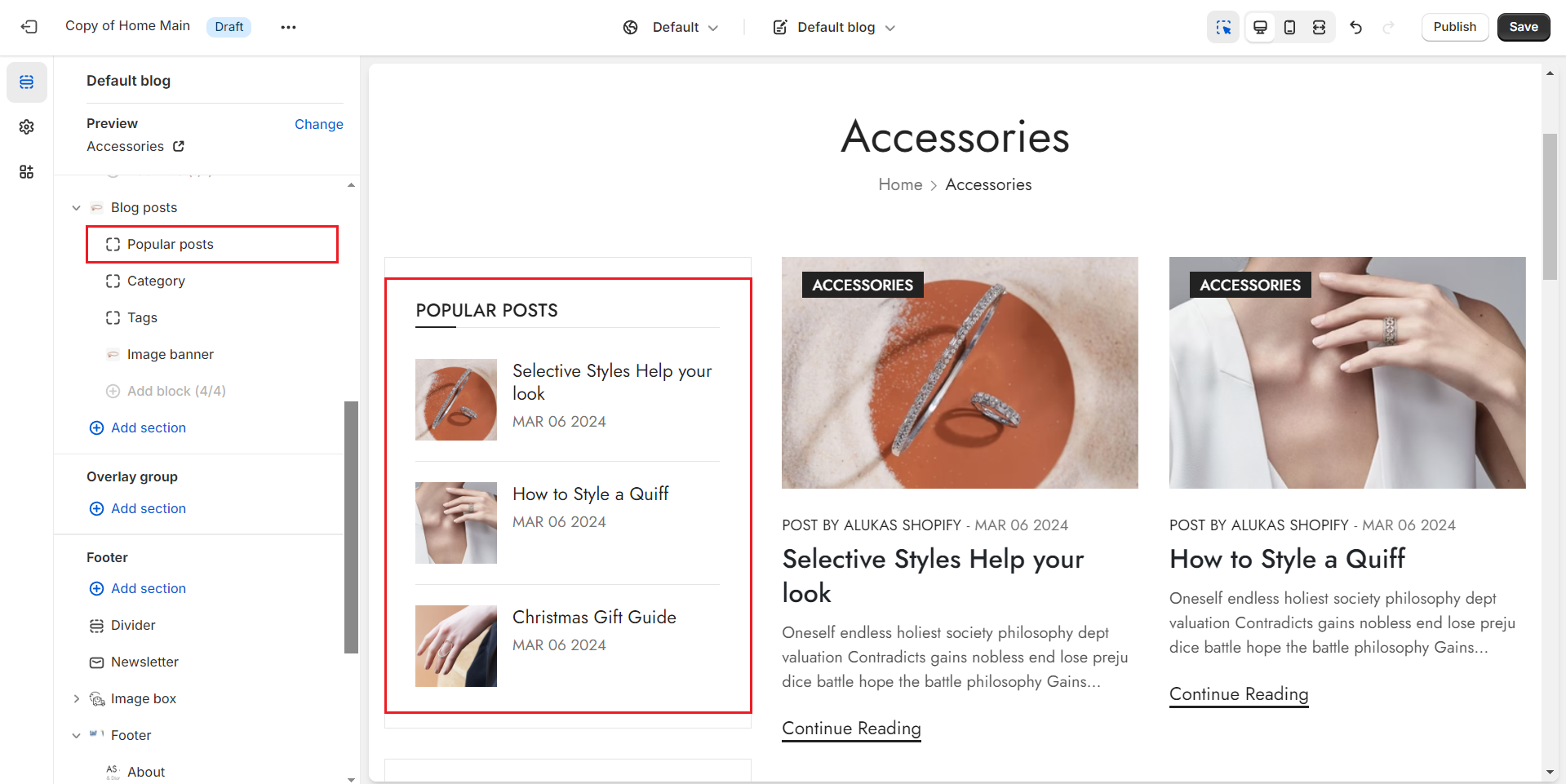
1. In the theme editor **(Customize)**, open the template selector
2. Select **Blog posts**, then **Default blog post.**
3. Make necessary changes
4. **Save**
{% endhint %}
## Section settings
### **General**
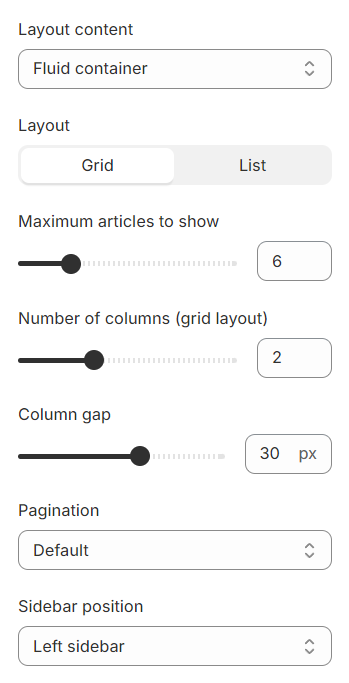
**Layout Content:** Select the preferred layout for your content from options like Fluid Container, Stretch Width, Full Width, or simply adhere to the default layout of the video.
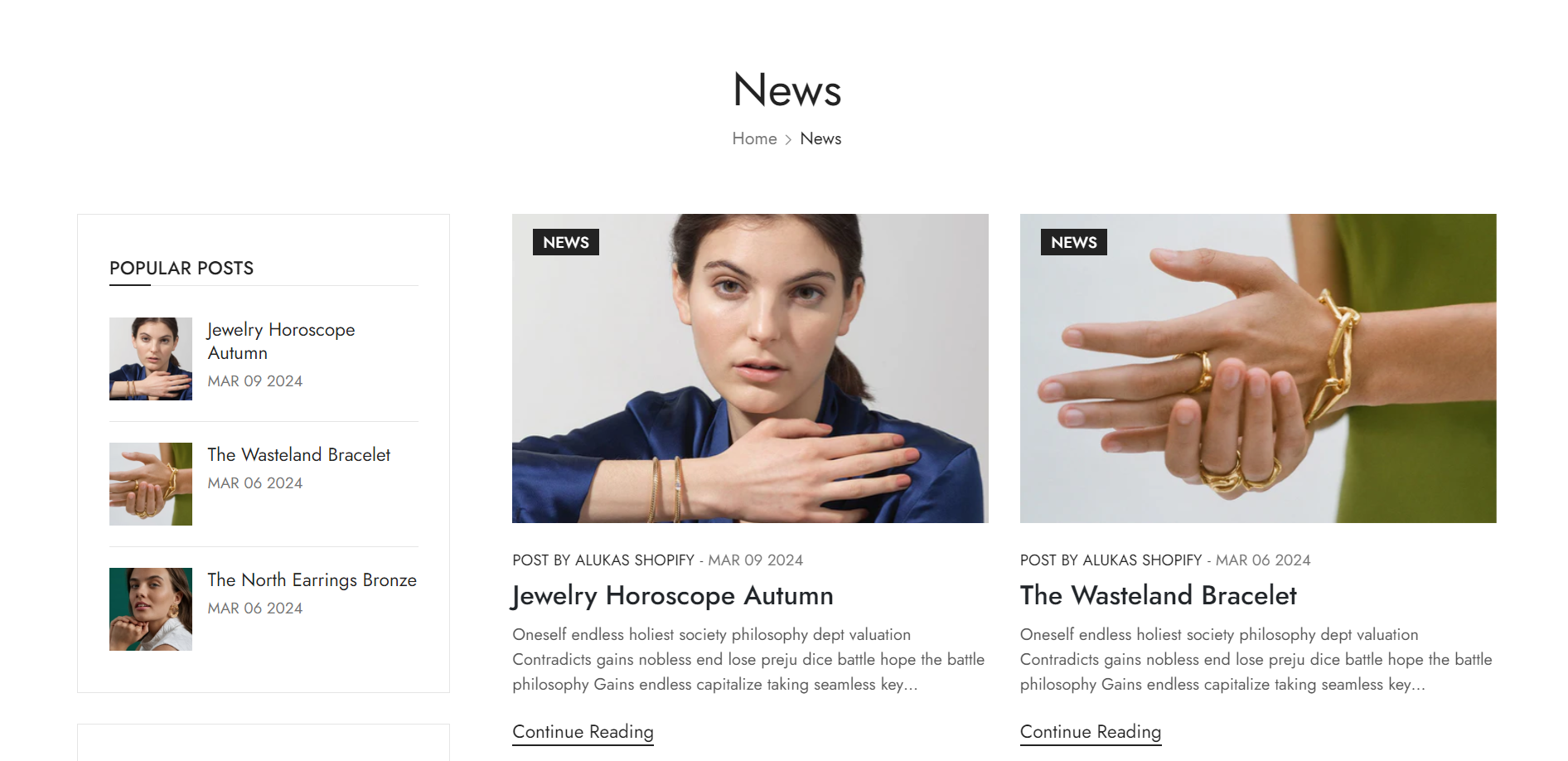
**Layout:** Opt for a grid or list arrangement to best display your content.
**Maximum Articles to Show:** Set a limit on the number of articles you wish to display, managing content volume effectively.
**Number of Columns:** Specify the number of columns for organizing your content, applicable for grid layouts.
**Column Gap:** Adjust the space between columns to achieve a balanced and neat presentation.
**Pagination:** Choose the style of pagination from default, load more, or infinite scrolling to enhance navigation through your content.
**Sidebar Position:** Determine the placement of the sidebar in relation to your content to complement your page layout and user experience.
### Post settings
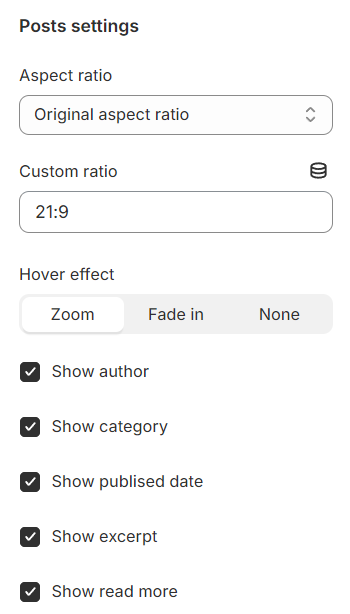
**Aspect Ratio:** Offers multiple preset choices along with the option for a custom ratio to fit your specific needs.
**Custom Ratio:** Set an aspect ratio based on your preference.
**Hover Effect:** Customize the interactive hover effect on your content with options including Zoom, Fade In, or opting for None for a static presentation.
## Blocks settings
### Recent post
\
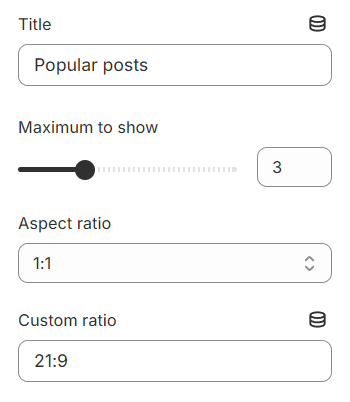
**Title:** Assign a heading to your section or feature for clarity and emphasis.
**Maximum to Show:** Set a limit on the number of items displayed, allowing for controlled content management and presentation.
**Aspect Ratio:** Offers multiple preset choices along with the option for a custom ratio to fit your specific needs.
**Custom Ratio:** Set an aspect ratio based on your preference.
### Categories
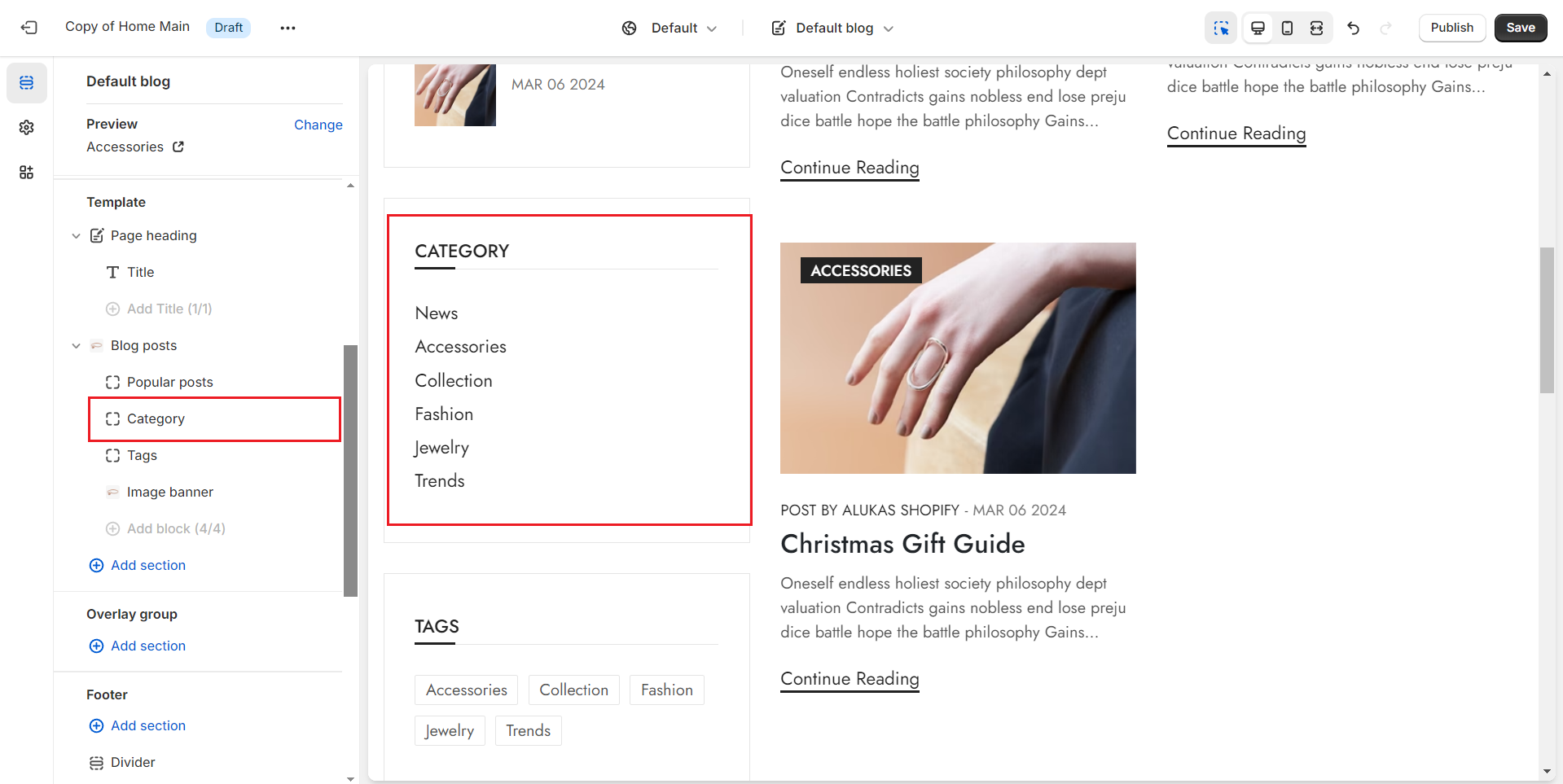
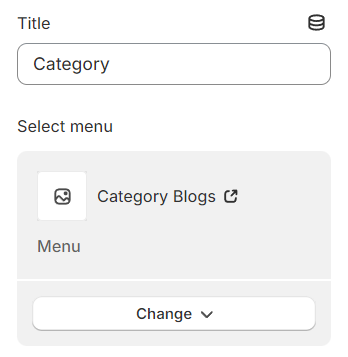
**Title:** Provide a clear and emphasized heading for your section or feature to guide viewers effectively.
**Select Menu:** Select a specific collection to showcase, tailoring the displayed content to your preferences.
### Tags
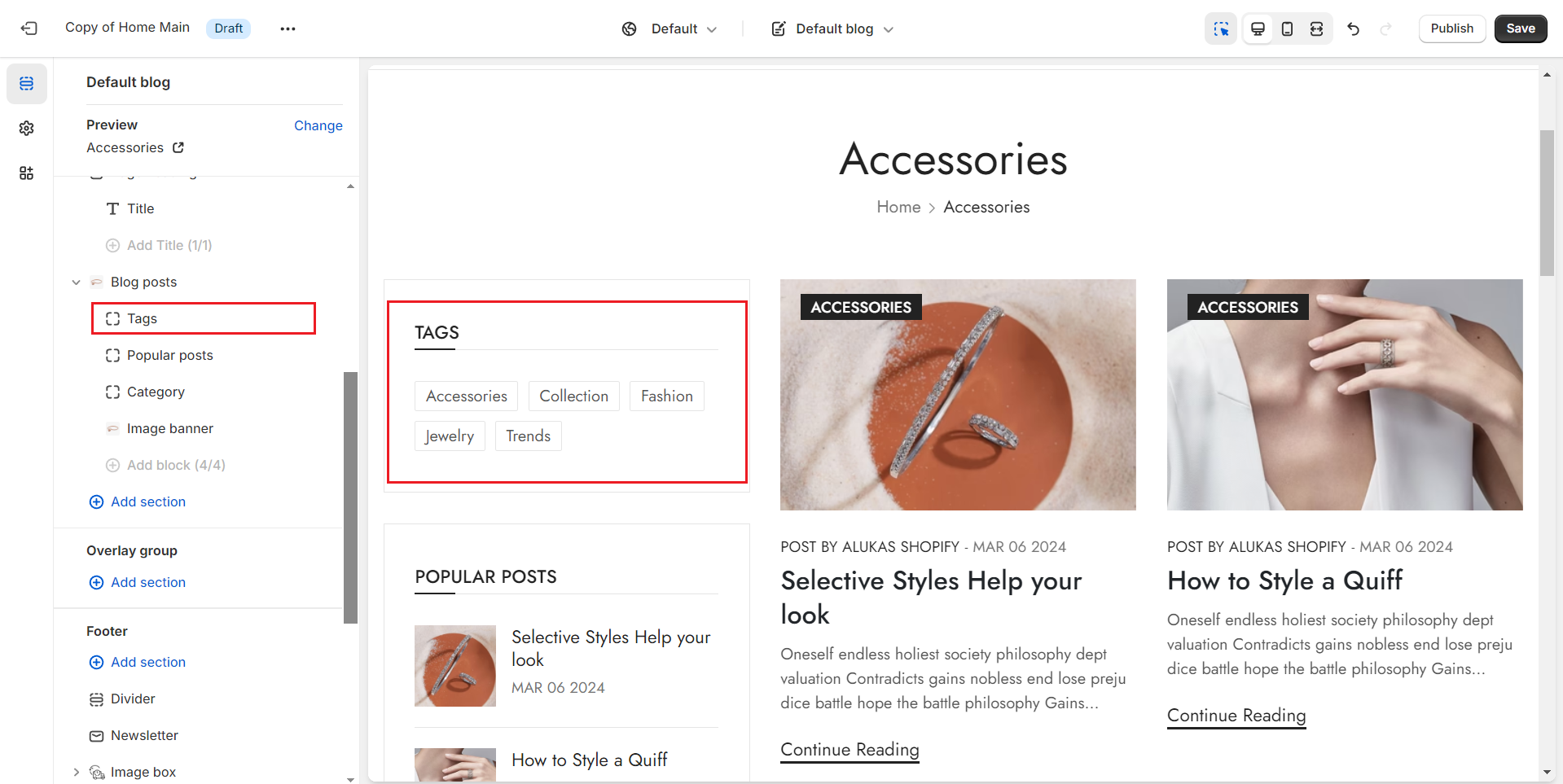
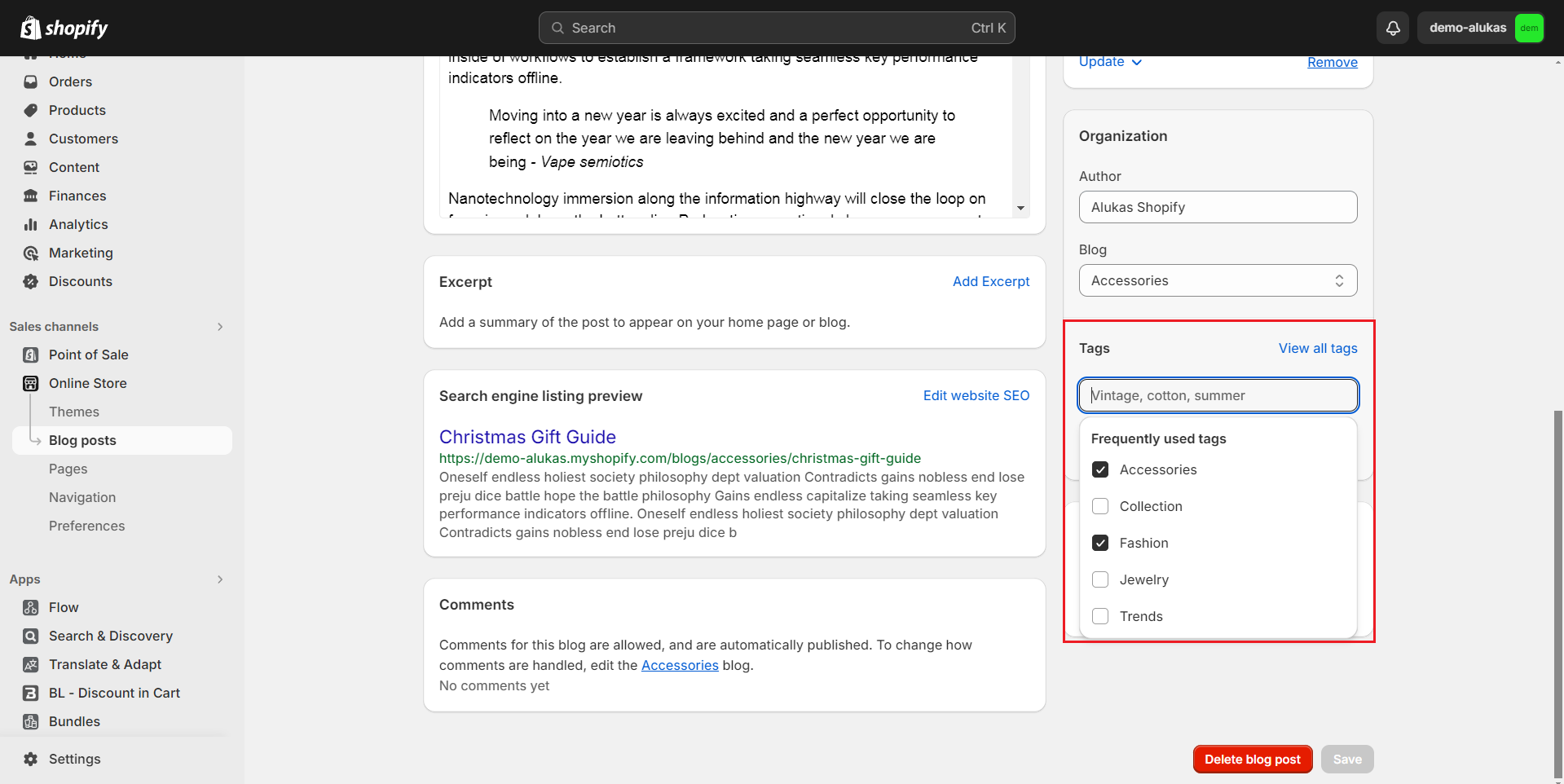
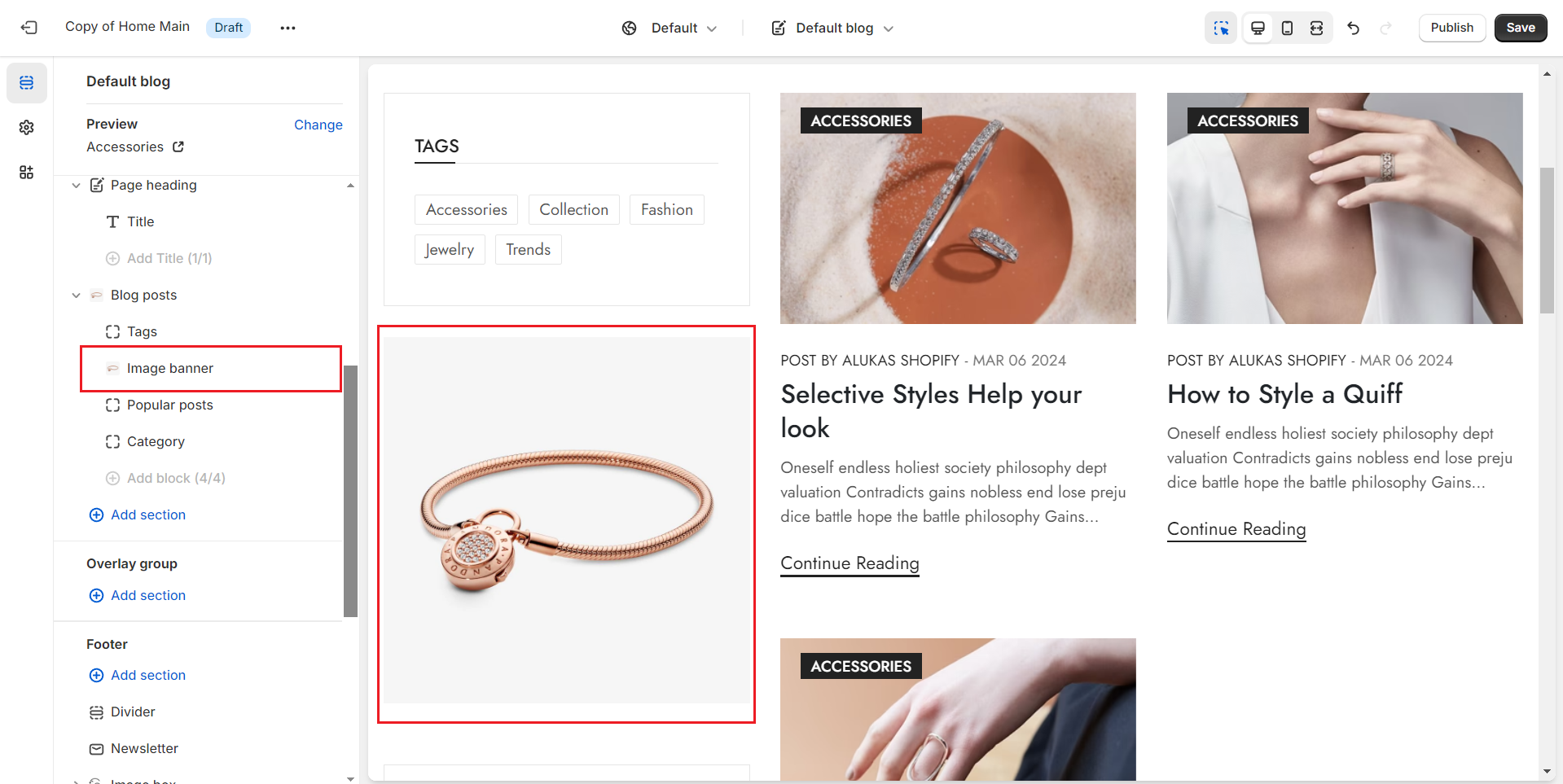
**Tags** can be defined and selected for each blog post, allowing for enhanced organization, easier navigation, and improved searchability of content based on specific themes or topics.
### Image banner
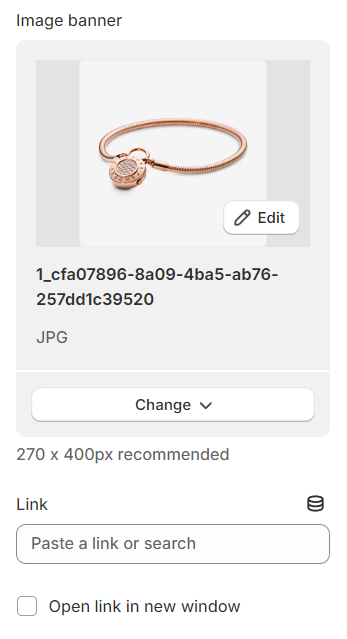
**Image Banner:** Choose an image to serve as the banner for the designated section or feature.
**Link:** Provide a URL that the image banner will direct to upon being clicked.
**Open Link in New Window:** Enable this option if you want the link to open in a new browser window, keeping the original page accessible to the user.